August 2026 Newsletter Recap: Expanded Capabilities. New Solutions. Trusted Ductmate Quality & Performance.
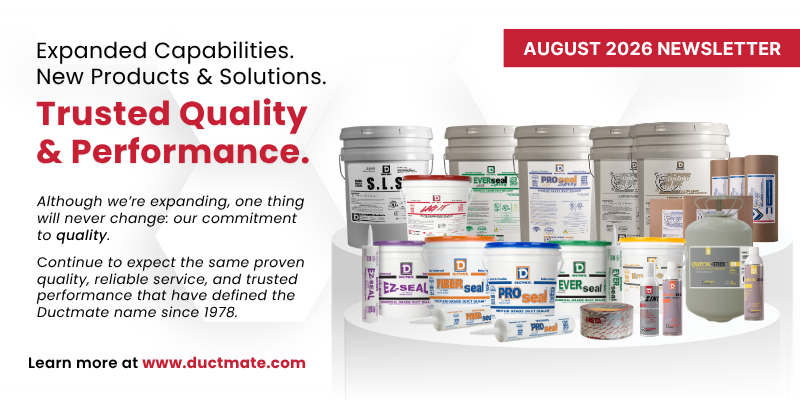
Expanded Capabilities. New Solutions. Trusted Ductmate Quality & Performance.
Ductmate is excited to announce the launch of our new Formulated Products Division, an important investment in the future of our products, capabilities, and customers.
Over the past year, we have made extensive upgrades in our production facility, including automating our sealant production lines and doubling our capacity. These upgrades will allow us to better support our customers, strengthen our existing product offerings, and bring new solutions to the HVAC industry.
This new division will support the continued development of sealants, adhesives, encapsulating edge coatings, cleaners and lubricants, sealing tapes, gaskets, and more. New product releases designed to meet evolving application and performance needs are coming soon.
Although we’re expanding, one thing will never change: our commitment to quality. You can continue to expect the same proven quality, reliable service, and trusted performance that have defined the Ductmate name since 1978.
A new division. Expanded capabilities. The same Ductmate quality and performance you trust. We look forward to sharing what’s next!
NEW & FEATURED PRODUCTS
INSTAseal
INSTAseal® is a peel‑and‑stick foil-backed butyl tape sealing solution designed to create a durable, air and weather‑tight seal on metal duct, flexible duct, and duct board, ideal for low, medium, and high‑pressure ductwork when speed and reliability matter for consistent application of duct sealant, every time.
Available in 2”, 3”, and 4” widths, INSTAseal is designed for indoor or outdoor use, holds up in all weather (including cold conditions), and resists UV exposure, mold, and mildew to help seals stay reliable over time.
With an easy tear and simple press‑down application, you can move quickly without cutting tools, helping cut installation time and save labor. Its instant adhesion means you can seal and immediately test or pressurize the system, and even make modifications or repairs while the system is operating, helping reduce downtime.
D-ZINC
D-ZINC is an industrial degalvanizer spray designed to help keep roll-forming machines, shears, punch press dies, and notchers free from galvanizing buildup. It works by softening, loosening, and flaking away galvanizing debris while also cutting quickly through galvanized scale and rust. D-ZINC is safe for use on metals, alloys, rubber, and most painted surfaces, making it a versatile maintenance solution for a wide range of equipment.
Formulated for easy spray-and-wipe application, D-ZINC not only cleans but also helps protect equipment and maintain product quality. With daily use, it helps keep machines clear of buildup while acting as a high-quality lubricant that supports smooth, efficient operation, even on Ductmate’s own flange systems.
EVERseal Spray
EVERseal™ Spray is a cost-effective, sprayable water-based duct sealant designed for sealing metal ductwork in shop and fabrication applications. Its spray-grade formula applies easily with a common airless sprayer, helping deliver time and labor savings over traditional application methods while providing a dependable solution for indoor and outdoor use.
Built for performance and compliance, EVERseal Spray is suitable for applications up to 15″ w.g. and offers excellent UV, flexibility, and mold-resistant properties. It is UL GREENGUARD Gold Certified, UL 181 B-M Listed, UL 723 Classified, LEED compliant, and meets applicable SCAQMD standards, making it a reliable and efficient, professional-grade duct sealing solution.
EnviroSeal & EnviroSeal Plus
EnviroSeal™ is a smooth, high-viscosity water-based duct sealant designed for sealing joints, seams, and duct wall penetrations. Built for all HVAC ductwork applications, this indoor and outdoor-grade sealant remains flexible, is paintable, and provides excellent mold and water resistance for dependable long-term performance.
With EnviroSeal, you can protect duct systems against air leaks while ensuring project compliance. It is GREENGUARD Gold certified, UL 181B-M and UL 181A-M Listed, UL 723 Classified, LEED compliant, meets applicable SCAQMD and CDPH standards, and conforms to NFPA 90A & 90B requirements.
Also available in EnviroSeal Plus with fiber reinforcement.
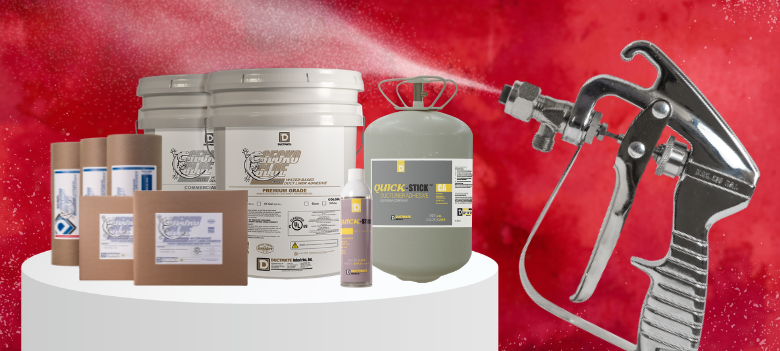
Quick-Stick CA
Quick-Stick™ CA is a California-compliant duct liner spray adhesive designed to provide quick tack and a permanent bond in a single application. Its high-build, pressure-sensitive formula bonds porous substrates and all common forms of HVAC insulation, including fiberglass, polyester, and elastomeric materials. The aggressive adhesive is also suitable for bonding foam, metal, and wood.
Quick-Stick CA is methylene chloride-free, HAPS-free, and formulated without ozone-depleting substances. Its low-VOC formula complies with California SCAQMD Rule 1168, making it an ideal choice for HVAC duct liner applications where performance, convenience, and regulatory compliance are essential.
The self-contained, disposable system makes Quick-Stick CA easy to transport and apply on the job site while providing excellent coverage. Its high level of tack helps installers work quickly and efficiently, reducing the need for multiple applications while creating a strong, reliable bond. Quick-Stick CA is also offered in an aerosol can for smaller applications and convenient portability.
INDUSTRY NEWS & MORE
Spray Adhesive Best Practices: A Guide to Proper Application
Learn essential spray adhesive best practices that improve bond strength, boost efficiency, and help deliver consistent installation results.
Click here to read the full article.
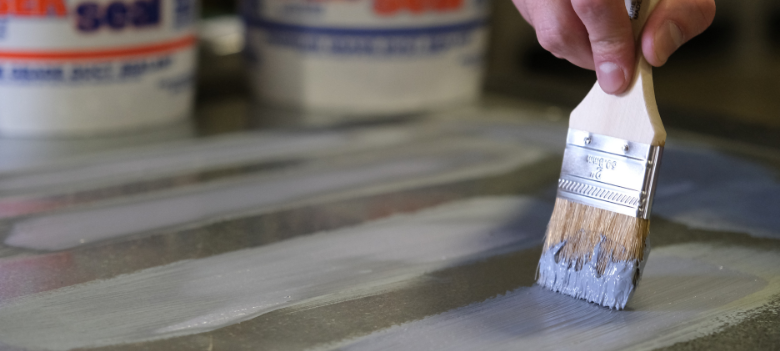
Applying Sealant with a Brush: Thickness, Technique, and Common Mistakes
Discover the best practices for brush-applied duct sealant to achieve consistent coverage, lasting durability, and dependable performance.
Click here to read the full article.
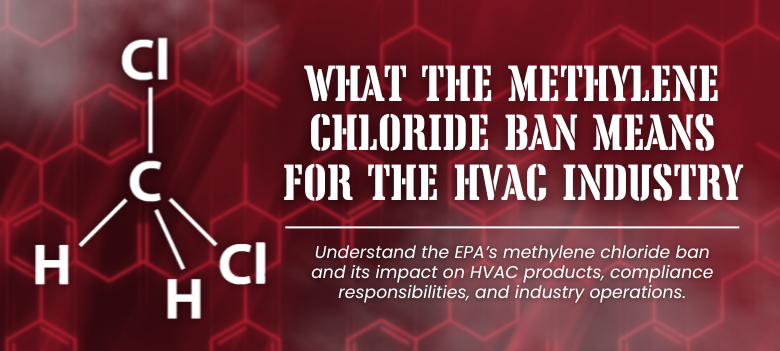
What the Methylene Chloride Ban Means for the HVAC Industry
Understand the EPA’s methylene chloride ban and its impact on HVAC products, compliance responsibilities, and industry operations.
Click here to read the full article.
Rapidmate Exclusive Advanced Labor-Saving Features Video
Tired of machine jams, slow reloads, and uneven seals during duct assembly? The Rapidmate Corner and Fastener System is the most advanced, labor-saving corner lineup in the industry. Engineered specifically to overcome the common failure points of traditional corners, Rapidmate delivers unprecedented speed and reliability in both the shop and the field.
PROMOTIONS
Cable Shark Cable Hanging System
Take 10% off all Cable Shark products with the promo code SHARKWEEK26 from July 27 through August 31, 2026, during this limited-time promotion!
*Market restrictions may apply.
Ready to Buy?
Ductmate products are available at over 350 locations across the US as part of a selective distribution network. Use the Ductmate distributor locator map to find a distributor near you.
Outside the US? Check out our international distributor list. For detailed information on product availability, lead times, or other international sales requests, please email ductmate@ductmate.com.
Sign up for Ductmate’s e-Newsletter
Don’t miss our monthly e-newsletter! Click here and sign up to receive exclusive Ductmate news and announcements, product information, promotions, industry news, and more, right in your inbox.
Connect With Us on Social Media
Follow Ductmate on our Facebook, Instagram, LinkedIn, and YouTube social media accounts to stay up-to-date with the latest news!