Ductmate Industries
Menu
Close
  • Home
  • News
  • Company
    • Overview
    • History
    • Careers
  • DeMI Login
  • Why Ductmate?
  • Products
  • Services
  • Technical Resources
  • Our Distributors
    • US Distributors
    • Find an International Distributor
    • Become A Distributor
  • Contact
800.990.8459
Login
Login below or Request Access to view all related resources.

Lost your password?
Forgotten Password
Cancel
  • Home
  • News
  • Company
    • Overview
    • History
    • Careers
  • DeMI Login
  • Why Ductmate?
  • Products
  • Services
  • Technical Resources
  • Our Distributors
    • US Distributors
    • Find an International Distributor
    • Become A Distributor
  • Contact

Blog

PolyArmor vs. Traditional Fiberglass & Elastomeric Duct Liner Insulations
Posted on April 16, 2025 by Ductmate Industries

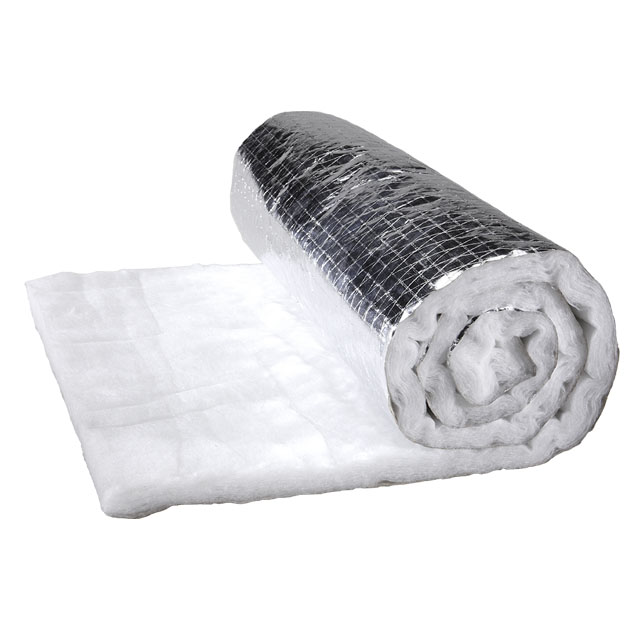
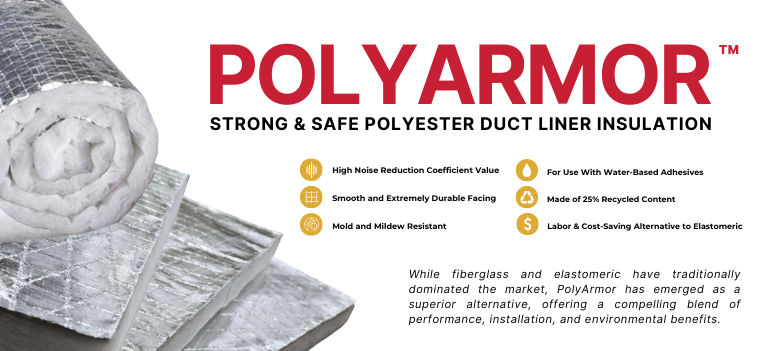
While fiberglass and elastomeric duct liner insulation have traditionally dominated the market, Ductmate’s PolyArmor polyester insulation has emerged as a superior alternative, offering a compelling blend of performance, installation, and environmental benefits.

Fiberglass: The Traditional Choice with Limitations

Fiberglass insulation is known for its affordability and thermal resistance. However, it presents several drawbacks:

  • Fiber Shedding: Fiberglass easily breaks down and releases microscopic fibers into the airstream, posing potential health risks and requiring careful handling and installation.   In time, this can lead to costly repairs and replacement of the insulation.
  • Moisture Absorption: While fiberglass itself does not provide food for mold, when it does collect moisture, dust, dirt, and other organic debris trapped inside can act as a breeding ground for mold.
  • Installation Challenges & Environmental Concerns: Installing fiberglass can be challenging, requiring specialized tools and protective gear.   During installation or if the insulation is disturbed, some individuals may experience temporary irritation of the skin, eyes, nose, and throat from both the fiberglass fibers and the formaldehyde released.
  • Reduced Effectiveness: If fiberglass insulation is compressed, its thickness will go down, leading to a reduced overall R-value/thermal resistance.

Elastomeric: Flexibility and Moisture Resistance at a Cost

Elastomeric insulation, often favored for its flexibility and closed-cell structure, offers excellent moisture resistance and condensation control. However, it also comes with its own set of drawbacks and considerations:

  • Higher Cost: Not only is elastomeric material more expensive compared to other insulation types, but it also can be up to four times more expensive to install.
  • Installation Complexity: Proper elastomeric installation requires specialized adhesives and techniques that significantly increase installation and labor costs.
  • Can Break Down: Over time, elastomeric, especially when exposed to exterior conditions, can break down due to factors like UV light and mechanical damage.  This can lead to costly repairs and replacement of the insulation.

PolyArmor: A Strong, Safe, and Superior Alternative

Ductmate’s PolyArmor polyester insulation is engineered to address the shortcomings of traditional insulation materials, offering a superior alternative with several compelling advantages:

  • Fiber-Free and Safe: PolyArmor eliminates fiber shedding and does not break down in the airstream, creating a cleaner and healthier indoor environment.   Its polyester material is soft and hypoallergenic, eliminating irritation during handling that you would typically experience with fiberglass insulation.
  • Superior Moisture Resistance: PolyArmor’s polyester construction provides exceptional resistance to moisture and condensation, minimizing the risk of mold growth.
  • Easy Installation: Designed for ease of installation, PolyArmor reduces labor costs and installation time, with its flexible nature allowing it to conform to any duct shape.
  • Enhanced Thermal Performance: PolyArmor provides industry-leading R-values/thermal resistance, contributing to increased energy efficiency and reduced system load.
  • Durability and Longevity: PolyArmor is engineered from strong and safe polyester that is webbed into a thermal blanket, which is then bonded with an extremely durable FSK-facing that reduces damage during fabrication, operation, and cleaning.
  • Environmental Benefits: Made with environmental sustainability in mind, PolyArmor is manufactured from 25% recycled content.

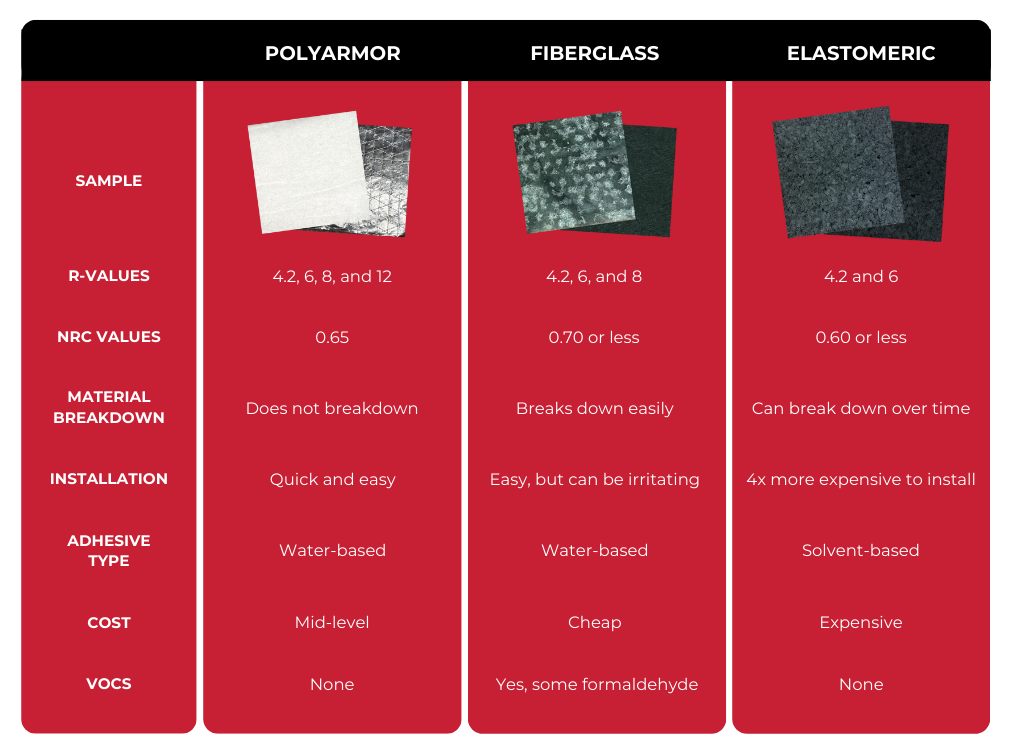
Quick Comparison Chart
Where Can I Buy PolyArmor?

Ready to buy PolyArmor?  Ductmate products are available at over 350 locations across the US as part of a selective distribution network.  Use the Ductmate distributor locator map to find a distributor near you.

Outside the US? Check out our international distributor list.  For detailed information on product availability, lead times, or other international sales requests, please email ductmate@ductmate.com.
Read More

PolyArmor™ Now Available in 3″ Thickness

Posted on March 29, 2021 by Ductmate Industries

Demanding Mega-Tech HVAC System? Don’t Sweat It!

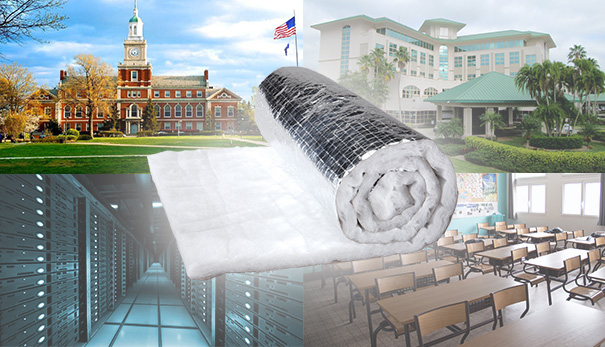
When mega tech companies have demanding HVAC systems, they look for a high-performance insulation that won’t sweat under the pressure of extreme temperature variations – they look to PolyArmor™ from Ductmate Industries. Now this high-performance, user-friendly, polyester line of insulations has been expanded to address the latest code requirements with its New R12 – 3” Thick PolyArmor Insulation.  The new 3” PolyArmor embodies all of the high-performance characteristics that have made PolyArmor the specified Insulation for some of the biggest tech companies. Despite its thickness, PolyArmor is still a user friendly, light weight, non-irritating insulation, designed to reduce energy costs and cold tracking in some of the most demanding, extreme HVAC conditions at a very competitive price. When you need an insulation that addresses the most challenging environmental and critical conditions like hospitals, schools, universities, and tech data centers, Don’t Sweat It! Choose PolyArmor from Ductmate Industries.

  • New IECC and ASHRAE codes are now requiring an R-12 thermal value for climate zones 5-8 (Northeast, Midwest (north of Kansas City), Rocky Mountains, and the Northwest)
  • Meets all 3” duct liner thermal resistance requirements and provides excellent sound absorption
  • Fiberglass free alternative, user friendly, and hypoallergenic polyester material
  • Extremely durable FSK facing and does not promote or support growth of mold or mildew
  • Made of 25% recycled Zero VOC material for increased sustainability
  • Job Specific orders only available in 50’ Rolls and widths of, 47.5”, 48”, 56.25”, 59”, & 60”
  • Use with Zero VOCs water-based adhesive & 2.75” insulated cap weld pins

R-Value, Thickness, and Width

WidthR-12
3" x 50'
47.5"PA475F3W50
48"PA48F3W50
56.25"PA5625F3W50
59"PA59F3W50
60"PA60F3W50


Read More

New Polyester Duct Liner Insulation Less Expensive & Reduces Installation Time

PolyArmor™ Duct Liner

Posted on July 19, 2013 by Ductmate Industries

Schreiber Foods is constructing a new corporate headquarters and global technology center in downtown Green Bay, Wisconsin. Founded in Green Bay in 1945, it is the world’s largest employee-owned dairy company. Its $50 million headquarters building spans 235,000 sq ft and reaches five stories high, featuring primarily office space. When completed, it will employ approximately 550 people in the greater Green Bay area.

The firm Hammel, Green and Abrahamson (HGA, Inc.) is an integrated architecture, engineering, and planning company responsible for designing the HVAC system, along with other mechanical systems, for the Schreiber Foods Project. HGA Senior Mechanical Engineer and Vice President Kevin Pope is the Engineer of Record on the project.

“For most ducting projects of this type, we typically specify a polyimide foam liner for the supply ducting and a fiberglass liner for the return,” Pope said. “The reason for this is any fibers coming off the fiberglass liner are captured in the air handling filtration system before it reenters the supply air. It’s also a way to keep costs down since fiberglass is less expensive and offers reasonable sound attenuation.”

The polyimide foam is typically coated with an acrylic-type polymer when used as a duct liner. The coating provides a protective barrier against dust and moisture from collecting in the duct. However, one of the drawbacks of polyimide foam is that it can be more expensive than other materials.

F. Ahern Co. is the mechanical contractor for the project, responsible for the sheet metal and other mechanical systems. J.F. Ahern Project Manager Shaun Neubauer has he need to control project costs as one of his primary functions.

“It’s part of my job to control project costs, so I begin immediately looking for alternative material choices,” Neubauer said. “We noticed immediately that the polyimide foam cost was coming in rather high, and we began investigating alternative duct liner material. We had an opportunity to meet with Ductmate Industries to compare their new PolyArmor polyester-based liner material.”

PolyArmor is new to the market, having been introduced only one and a half years ago. It is a polyester duct liner insulation used in forced-air heating, ventilation, and air conditioning systems. It is engineered to provide industry-leading R-values, with excellent noise reduction and superior indoor air quality.

The polyester material is webbed into a thermal blanket, which is then bonded with an FSK facing to resist damage during system installation and operation. It also provides excellent durability in the airstream.

Neubauer said the PolyArmor met the specification requirements, and he was pleasantly surprised with the cost estimate. Since the polyimide was specified, he submitted the PolyArmor cost saving and specifications to Pope and requested a substitution, which was approved.

F. Ahern and Neubauer have a long history working with Ductmate. Quite often, they specify other Ductmate products, such as access doors, connectors, and vane systems. Their relationship was a key factor in their decision to install the new PolyArmor liner material.

More emphasis was placed on noise reduction than on insulation values, although both were important. The PolyArmor proved excellent for sound attenuation, achieving a .65 NRC rating, while also delivering an R5 insulation value in one-inch material thickness.

Duct sizes vary, with dimensions up to 6’ by 3’, and they can handle an airflow of up to 80,000 CFM. The specifications called for the PolyArmor to be installed approximately 20’ downstream from each VAV discharge connection.

J.F. Ahern Shop Manager Chris Elwing was impressed with the installation performance of PolyArmor. With over 31 years of experience in the sheet metal industry, 13 of those with J.F. Ahern, he has seen his share of duct insulation.

“We install all duct liners at the shop and have had to use an elastomeric-type product for many of our installations,” Elwing said. “Elastomeric material is tough to work with because it’s hard to cut and shape into place. We had never used the PolyArmor liner before and discovered that it installs much faster and is easy to pin; it greatly reduced our man hours on the project.”

Elwing estimated that they installed 25,000 sq ft of the liner material, all of which was installed by hand using no coil machine. Even with the additional labor time required, he cut his installation time by 30% or more!

PolyArmor liner is installed on the duct surface using water-based adhesives. This eliminates the need for solvent-based bonding agents that emit VOCs for many years after installation. The polyester base material does not promote or support the growth of mold or mildew, making it very desirable for a healthy environment and occupant safety.

The net result was even better than expected.

“Not only did we reduce costs for the liner material, we saved another 30% on installation time, which is significant,” Neubauer commented.

Both companies agree they will use PolyArmor on future projects.

Read More

Categories

  • Newsletter Recap
  • Ductmate News
  • Product News
  • Case Study
  • Events
  • Industry News

Archives

Tags

  • rectangular duct connector
  • adhesives
  • access doors
  • round duct connector
  • newsletter recap
  • case study
  • sealants
  • trade shows
  • insulation
  • sustainability
  • distributor training
  • hangers and hanging systems
  • industry news
  • product announcement
  • other
  • gasket

Corporate Office

Charleroi, PA

210 Fifth Street
Charleroi, PA 15022

Phone: 800-990-8459

Fax: 724-258-5494

Contact Us

Manufacturing Locations

E. Monongahela, PA

1502 Industrial Drive
E. Monongahela, PA 15063

Phone: 724-258-0500

Lodi, CA

810 S Cluff Avenue
Lodi, CA 95240

Phone: 209-333-4680

Wagoner, OK

300 SE 15th Street
Wagoner, OK 74467

Phone: 918-201-7022

Interested in staying up to date with the latest Ductmate news and product information

Subscribe to Our Newsletter

    Social

Copyright © Ductmate Industries 2026. All rights reserved.

Privacy Policy