Ductmate Industries
Menu
Close
  • Home
  • News
  • Company
    • Overview
    • History
    • Careers
  • DeMI Login
  • Why Ductmate?
  • Products
  • Services
  • Technical Resources
  • Our Distributors
    • US Distributors
    • Find an International Distributor
    • Become A Distributor
  • Contact
800.990.8459
Login
Login below or Request Access to view all related resources.

Lost your password?
Forgotten Password
Cancel
  • Home
  • News
  • Company
    • Overview
    • History
    • Careers
  • DeMI Login
  • Why Ductmate?
  • Products
  • Services
  • Technical Resources
  • Our Distributors
    • US Distributors
    • Find an International Distributor
    • Become A Distributor
  • Contact

Blog

August 2026 Newsletter Recap: Expanded Capabilities. New Solutions. Trusted Ductmate Quality & Performance.

Posted on August 24, 2026 by Ductmate Industries

Expanded Capabilities. New Solutions. Trusted Ductmate Quality & Performance.

Ductmate is excited to announce the launch of our new Formulated Products Division, an important investment in the future of our products, capabilities, and customers.

Over the past year, we have made extensive upgrades in our production facility, including automating our sealant production lines and doubling our capacity. These upgrades will allow us to better support our customers, strengthen our existing product offerings, and bring new solutions to the HVAC industry.

This new division will support the continued development of sealants, adhesives, encapsulating edge coatings, cleaners and lubricants, sealing tapes, gaskets, and more. New product releases designed to meet evolving application and performance needs are coming soon.

Although we’re expanding, one thing will never change: our commitment to quality. You can continue to expect the same proven quality, reliable service, and trusted performance that have defined the Ductmate name since 1978.

A new division. Expanded capabilities. The same Ductmate quality and performance you trust. We look forward to sharing what’s next!


NEW & FEATURED PRODUCTS

INSTAseal

INSTAseal® is a peel‑and‑stick foil-backed butyl tape sealing solution designed to create a durable, air and weather‑tight seal on metal duct, flexible duct, and duct board, ideal for low, medium, and high‑pressure ductwork when speed and reliability matter for consistent application of duct sealant, every time.

Available in 2”, 3”, and 4” widths, INSTAseal is designed for indoor or outdoor use, holds up in all weather (including cold conditions), and resists UV exposure, mold, and mildew to help seals stay reliable over time.

With an easy tear and simple press‑down application, you can move quickly without cutting tools, helping cut installation time and save labor. Its instant adhesion means you can seal and immediately test or pressurize the system, and even make modifications or repairs while the system is operating, helping reduce downtime.

D-ZINC

D-ZINC is an industrial degalvanizer spray designed to help keep roll-forming machines, shears, punch press dies, and notchers free from galvanizing buildup. It works by softening, loosening, and flaking away galvanizing debris while also cutting quickly through galvanized scale and rust. D-ZINC is safe for use on metals, alloys, rubber, and most painted surfaces, making it a versatile maintenance solution for a wide range of equipment.

Formulated for easy spray-and-wipe application, D-ZINC not only cleans but also helps protect equipment and maintain product quality. With daily use, it helps keep machines clear of buildup while acting as a high-quality lubricant that supports smooth, efficient operation, even on Ductmate’s own flange systems.

EVERseal Spray

EVERseal™ Spray is a cost-effective, sprayable water-based duct sealant designed for sealing metal ductwork in shop and fabrication applications. Its spray-grade formula applies easily with a common airless sprayer, helping deliver time and labor savings over traditional application methods while providing a dependable solution for indoor and outdoor use.

Built for performance and compliance, EVERseal Spray is suitable for applications up to 15″ w.g. and offers excellent UV, flexibility, and mold-resistant properties. It is UL GREENGUARD Gold Certified, UL 181 B-M Listed, UL 723 Classified, LEED compliant, and meets applicable SCAQMD standards, making it a reliable and efficient, professional-grade duct sealing solution.

EnviroSeal & EnviroSeal Plus

EnviroSeal™ is a smooth, high-viscosity water-based duct sealant designed for sealing joints, seams, and duct wall penetrations. Built for all HVAC ductwork applications, this indoor and outdoor-grade sealant remains flexible, is paintable, and provides excellent mold and water resistance for dependable long-term performance.

With EnviroSeal, you can protect duct systems against air leaks while ensuring project compliance. It is GREENGUARD Gold certified, UL 181B-M and UL 181A-M Listed, UL 723 Classified, LEED compliant, meets applicable SCAQMD and CDPH standards, and conforms to NFPA 90A & 90B requirements.

Also available in EnviroSeal Plus with fiber reinforcement.

Quick-Stick CA

Quick-Stick™ CA is a California-compliant duct liner spray adhesive designed to provide quick tack and a permanent bond in a single application. Its high-build, pressure-sensitive formula bonds porous substrates and all common forms of HVAC insulation, including fiberglass, polyester, and elastomeric materials. The aggressive adhesive is also suitable for bonding foam, metal, and wood.

Quick-Stick CA is methylene chloride-free, HAPS-free, and formulated without ozone-depleting substances. Its low-VOC formula complies with California SCAQMD Rule 1168, making it an ideal choice for HVAC duct liner applications where performance, convenience, and regulatory compliance are essential.

The self-contained, disposable system makes Quick-Stick CA easy to transport and apply on the job site while providing excellent coverage. Its high level of tack helps installers work quickly and efficiently, reducing the need for multiple applications while creating a strong, reliable bond. Quick-Stick CA is also offered in an aerosol can for smaller applications and convenient portability.


INDUSTRY NEWS & MORE

Spray Adhesive Best Practices: A Guide to Proper Application

Learn essential spray adhesive best practices that improve bond strength, boost efficiency, and help deliver consistent installation results.

Click here to read the full article.

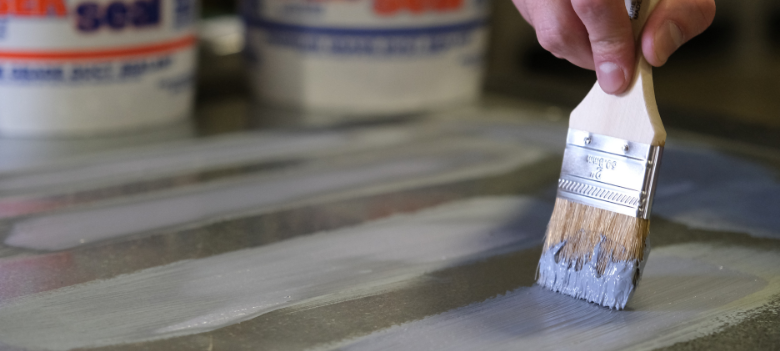
Applying Sealant with a Brush: Thickness, Technique, and Common Mistakes

Discover the best practices for brush-applied duct sealant to achieve consistent coverage, lasting durability, and dependable performance.

Click here to read the full article.

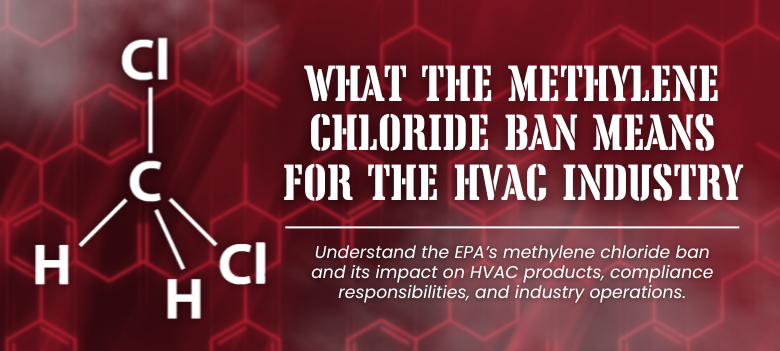
What the Methylene Chloride Ban Means for the HVAC Industry

Understand the EPA’s methylene chloride ban and its impact on HVAC products, compliance responsibilities, and industry operations.

Click here to read the full article.

Rapidmate Exclusive Advanced Labor-Saving Features Video

Tired of machine jams, slow reloads, and uneven seals during duct assembly? The Rapidmate Corner and Fastener System is the most advanced, labor-saving corner lineup in the industry. Engineered specifically to overcome the common failure points of traditional corners, Rapidmate delivers unprecedented speed and reliability in both the shop and the field.


PROMOTIONS

Cable Shark Cable Hanging System

Take 10% off all Cable Shark products with the promo code SHARKWEEK26 from July 27 through August 31, 2026, during this limited-time promotion!

*Market restrictions may apply.


Ready to Buy?

Ductmate products are available at over 350 locations across the US as part of a selective distribution network.  Use the Ductmate distributor locator map to find a distributor near you.

Outside the US? Check out our international distributor list.  For detailed information on product availability, lead times, or other international sales requests, please email ductmate@ductmate.com.

Sign up for Ductmate’s e-Newsletter

Don’t miss our monthly e-newsletter!  Click here and sign up to receive exclusive Ductmate news and announcements, product information, promotions, industry news, and more, right in your inbox.

Connect With Us on Social Media

Follow Ductmate on our Facebook, Instagram, LinkedIn, and YouTube social media accounts to stay up-to-date with the latest news!
Read More

Applying Sealant with a Brush: Thickness, Technique, and Common Mistakes

Posted on August 18, 2026 by Ductmate Industries

Effective duct sealing starts with careful preparation and proper application. Applying sealant at a consistent thickness, using the right brush technique, and allowing it to cure fully helps produce a durable seal and dependable system performance.

Follow these best practices to achieve a consistent, durable, and airtight seal when sealing ductwork with a brush.

Preparing the Duct Surface

Apply sealant only to clean, dry, and sound surfaces. Dirt, dust, oil, fabrication lubricants, moisture, rust, and loose material can prevent the sealant from properly adhering to the metal.

Inspect each connection before sealing. Joints should be fully seated and fastened. Poorly fitted connections or large openings should be corrected mechanically rather than filled with excessive sealant.

Before beginning:

    ✅ Confirm that joints are properly fitted and fastened
    ✅ Remove oil, dust, moisture, rust, and loose material
    ✅ Review the product’s technical and safety data sheets
    ✅ Verify acceptable application temperatures
    ✅ Identify all joints, seams, fasteners, and penetrations requiring sealant

The specific locations to be sealed will depend on the duct construction, sealing class, and project specifications. Sealing locations may include transverse joints and longitudinal seams, elbows and fitting connections, takeoffs and collars, access-door frames, and duct-wall penetrations.

Selecting and Positioning the Brush

Brush selection may depend on the sealant’s consistency. A 2- or 3-inch chip brush with short, stiff bristles generally provides good control around joints, corners, fittings, and fasteners. Heavy or fiber-reinforced sealants may require firmer bristles.

✅ Use a clean brush with straight, firm bristles to achieve even coverage and keep debris out of the sealant.
❌ Avoid brushes with loose, bent, or hardened bristles, which can create gaps, produce uneven coverage, or leave debris in the sealant.

✅ Hold the brush at a moderate angle, typically around 30 to 45 degrees.
❌ Do not press so hard that the brush scrapes sealant away from the joint.

✅ Brush across the seam to work material into small gaps and irregularities.
❌ Do not brush only parallel to the seam, which may leave the joint insufficiently covered.

✅ Use lighter finishing strokes to smooth the surface and feather the edges.

Application techniques will vary slightly depending on the shape and construction of the ductwork. Pay close attention to the duct profile to ensure complete coverage in areas that are easy to miss.

⬛ On rectangular duct, pay close attention to corners, standing seams, drives, and changes in profile.
⚫ On round duct, apply sealant around the entire circumference and inspect the underside carefully.

Building a Consistent Layer

Load the brush with enough sealant to bridge the joint and cover the surrounding metal. Make sure screw heads, rivets, corners, and other potential leakage points are completely sealed.

If reinforcing mesh is required, apply a base layer of sealant, embed the mesh without gaps or wrinkles, and cover it completely with additional material.

IMPORTANT: Avoid applying sealant as a thin, paint-like film. The material must form a continuous layer at the wet-film thickness specified by the manufacturer.

Work in manageable sections and avoid brushing sealant after it begins to skin over. Overworking partially set material can create drag marks, gaps, or poor adhesion.

Applying the Correct Amount of Sealant

Applying more sealant than specified does not necessarily create a better seal.

Too little sealant can cause: gaps, pinholes, exposed seam edges, incomplete coverage, and air leakage.

Too much sealant can cause: sagging, cracking, uneven shrinkage, longer curing times, and a dry outer skin with uncured material underneath.

Aim for a wet-film thickness of approximately 60 to 80 mils during normal application, unless otherwise directed by the product instructions.

✅ Use a wet-film gauge to confirm that the sealant falls within the recommended range.
❌ If the layer is noticeably thicker than a nickel, the sealant is likely overapplied.

If multiple coats are needed, follow the manufacturer’s instructions for thickness, drying, and recoating.

Measuring Wet-Film Thickness

Use a wet-film gauge, also called a mil gauge, to confirm the thickness of freshly applied sealant:

  1. Press the gauge straight into the wet material until it contacts the duct.
  2. Remove the gauge without dragging or sliding it.
  3. Locate the highest tooth that is wet.
  4. Find the next tooth that is dry.
  5. Read the thickness between those two measurements.

Take readings at several points, including seam intersections, corners, vertical surfaces, and the underside of the duct.

✅ Measure the sealant while it is still wet.
❌ Do not rely only on appearance. A seal may look complete while still being too thin.

Inspecting and Curing the Seal

Before leaving the application area, inspect for:

    ✅ Complete coverage across every joint
    ✅ Covered fasteners and seam edges
    ✅ Consistent thickness
    ❌ Pinholes, gaps, thin areas, or exposed metal
    ❌ Runs, sags, debris, or excessive buildup

Correct defects while the sealant is still workable. Allow the material to cure fully before pressurizing, insulating, painting, or concealing the ductwork. A surface that feels dry may still be uncured underneath.

Choosing the Right Sealant

Ductmate offers a variety of water-based and solvent-based duct sealants to meet different application, budget, and jobsite needs:

PROseal® & FIBERseal®

  • Premium, water-based formulations that deliver dependable performance in demanding HVAC applications.
  • PROseal features a smooth texture, while FIBERseal adds fiber reinforcement for enhanced strength.

EVERseal™ & EZ-Seal®

  • Commercial-grade formulations that provide reliable performance at a cost-effective price point.
  • EVERseal features a smooth texture, while EZ-Seal adds fiber reinforcement for enhanced strength.

EnviroSeal™ & EnviroSeal Plus

  • High-viscosity, water-based formulations that offer excellent mold and water resistance for indoor and outdoor installations.
  • EnviroSeal features a smooth texture, while EnviroSeal Plus adds fiber reinforcement for enhanced strength.

SOLVseal™

  • A premium, low-VOC solvent-based formulation that dries quickly, making it well suited for shorter project timelines.
  • Offers minimal shrinkage, high water resistance, and strong sealing performance for demanding jobsite conditions.

Regardless of which one you choose, Ductmate sealants are extremely resistant to cracking and will remain permanently flexible.  This is especially useful for applying sealant in the shop and then transporting it to other locations or a project site.

Alongside excellent adhesion to metal, they have a lower brush drag, resulting in better spreadability and allowing for a more even and consistent coating, ensuring an airtight, leak-free seal.

Ready to Buy?

Ductmate products are available at over 350 locations across the US as part of a selective distribution network.  Use the Ductmate distributor locator map to find a distributor near you.

Outside the US? Check out our international distributor list.  For detailed information on product availability, lead times, or other international sales requests, please email ductmate@ductmate.com.

Read More

What the Methylene Chloride Ban Means for the HVAC Industry

Posted on August 18, 2026 by Ductmate Industries

Federal restrictions on methylene chloride affect more than just paint strippers. The regulation also covers adhesives, sealants, removers, cleaners, and degreasers, including products used in commercial HVAC and ductwork applications.

For manufacturers, distributors, and contractors, the message is clear: a methylene chloride-containing product cannot continue to be sold or used simply because it is labeled for professional or industrial use. Most industrial and commercial uses are prohibited under the U.S. Environmental Protection Agency’s 2024 rule.

What Is Methylene Chloride?

Methylene chloride, also known as dichloromethane or DCM, is a volatile solvent. It was commonly used in sealants and adhesives because it evaporates quickly, dissolves many materials, and supports rapid bonding. It has also been used in coating removers, aerosol cleaners, metal degreasers, and specialty formulations.

The EPA determined that methylene chloride presents health risks from inhalation and skin exposure. These hazards are especially relevant to HVAC applications, where products may be installed in mechanical rooms, shafts, plenums, and other poorly ventilated areas. In enclosed spaces, rapid evaporation can create dangerous concentrations of chemical vapors.

Understanding the EPA Rule

The EPA’s final rule took effect July 8, 2024, under the Toxic Substances Control Act. It prohibits all consumer uses and most industrial and commercial uses of methylene chloride. The regulation generally applies to products containing 0.1% or more methylene chloride by weight.

The rule established a phased compliance schedule. Retail sales and manufacturing for prohibited use ended in 2025, followed by processing and distribution restrictions. As of April 28, 2026, most industrial and commercial uses are prohibited, even when a product was purchased before the deadline or remains in existing inventory.

Implications for the HVAC Industry

The EPA’s permitted uses do not include ordinary commercial HVAC duct sealing, insulation attachment, or equipment installation. A narrow extension through May 8, 2029, applies to adhesives and sealants used in aircraft, spacecraft, and turbine applications for structural and safety-critical purposes. It does not cover conventional ductwork, duct liner installation, insulation attachment, vapor-barrier repair, or general building air sealing.

For the HVAC industry, affected products may include duct sealants, contact and spray adhesives, gasket adhesives, insulation repair products, and certain cleaners or removers.

Switching from Quick-Stick HS to Quick-Stick CA

In February 2025, we proactively discontinued our Quick-Stick HS adhesive formulation and replaced it with our new, methylene chloride-free Quick-Stick CA.

Quick-Stick CA’s new, low-VOC formula complies with California’s SCAQMD 1168 regulations. It provides the same quick, high-tack, and permanent bond for all types of HVAC insulation, ensuring you can maintain the high quality you expect while using a safer, more environmentally friendly product without compromising on performance.

The new Quick-Stick CA formula is highly effective and has been well received; however, the product is flammable while wet. This flammability concern applies immediately after spraying while the adhesive remains in its wet state.

With previous products, users commonly applied too much adhesive, which resulted in delayed tack and curing. The new Quick-Stick CA formula requires only one simple, even pass, covering approximately 90% of the metal surface in accordance with the SMACNA standard. The specific amount of adhesive is not regulated and should be limited to the amount necessary to hold the insulation securely in place until it is pinned. After spraying, wait 30-60 seconds before applying the insulation. This allows the propellant to flash off. Quick-Stick CA is non-flammable once the product is dry.

Ready to Buy?

Ductmate products are available at over 350 locations across the US as part of a selective distribution network.  Use the Ductmate distributor locator map to find a distributor near you.

Outside the US? Check out our international distributor list.  For detailed information on product availability, lead times, or other international sales requests, please email ductmate@ductmate.com.

Read More

Selecting Gasket for Round & Oval Ductwork: Understanding Open vs. Closed-Cell Foam

Posted on September 25, 2025 by Ductmate Industries

When sealing round or flat oval ductwork, foam gasket tape is often used to create an airtight seal, maintain energy efficiency, and ensure proper airflow; however, not all foams are created equal. Understanding the difference between open-cell and closed-cell foam is crucial for ensuring a proper seal and avoiding costly mistakes when choosing your materials.

What’s the Difference Between Open and Closed-Cell Foam?

The primary difference between open-cell and closed-cell foam lies in their internal structure.

Open-cell foam has interconnected air pockets, making it highly permeable to air and water. While it’s excellent for cushioning or sound absorption, its permeability prevents it from forming an airtight or watertight seal, similar to a sponge. This can lead to air leaks, moisture absorption, and potential mold growth in HVAC systems.

Due to its permeability, open-cell foam is generally not suitable for sealing ductwork. It is more commonly used for projects that require acoustic absorption, padding and cushioning, such as in furniture and bedding, as well as for air sealing where moisture isn’t an issue, like in interior walls and attics.

Closed-cell foam, on the other hand, is composed of individual, sealed cells that resemble tiny balloons packed tightly together. This structure makes the foam highly resistant to air and moisture, making it ideal for insulation and sealing. It is also denser and more durable than open-cell foam, resisting compression set, which is the tendency for it to lose its thickness after being compressed.

While both open and closed-cell foam have their uses, closed-cell foam is the clear choice for ductwork because it creates an effective seal by resisting air and moisture, preventing leaks and condensation.

Why is Neoprene Gasket the Best Option for Round & Oval Ductwork?

Among the closed-cell foam gasket options, neoprene is a superior material made from synthetic rubber, ideal for sealing round and flat oval ductwork. Its unique advantages make it the best choice for ensuring a reliable and long-lasting seal.

  • Excellent Sealing Properties: Closed-cell neoprene provides a firm, airtight seal, which is critical for preventing air leaks in round and flat oval ductwork. Its ability to conform to irregular surfaces while maintaining integrity ensures a reliable seal.
  • Durability and Resilience: Neoprene is highly resilient and resistant to compression set. This means it can withstand the constant pressure and vibration common in HVAC systems without losing its shape or sealing effectiveness over time.
  • Flexibility: While durable, neoprene remains flexible, which is essential for creating a tight seal around the curved surfaces of round ductwork. This flexibility allows it to compress evenly around the flanges.
  • Clean & Simple Removal: The resilient nature of neoprene foam makes it easy to remove from ductwork without leaving behind a sticky residue or falling apart. This simplifies the process of disassembling ductwork for periodic cleaning or maintenance, allowing for a quick and easy application of new gasket tape to reseal the connection.

Where Can I Buy Ductmate’s Neoprene Gasket Tape?

Ready to buy our neoprene gasket tape?  Ductmate products are available at over 350 locations across the US as part of a selective distribution network.  Use the Ductmate distributor locator map to find a distributor near you.

Outside the US? Check out our international distributor list.  For detailed information on product availability, lead times, or other international sales requests, please email ductmate@ductmate.com.

Read More

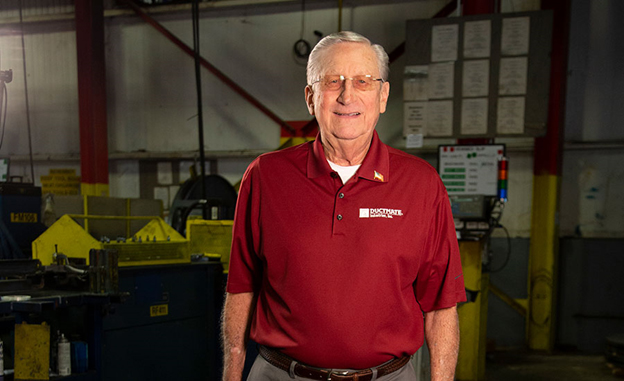
Ductmate Announces the Passing of William “Bill” Bradford Jr

Posted on January 6, 2023 by Ductmate Industries

Sheet Metal Industry Icon, Ductmate’s First Foreman Passes Away at 85

Ductmate Industries, leadership and employees are saddened to report that William “Bill” Bradford Jr., 85, passed away peacefully with his family by his side on Sunday, Jan. 1, 2023.

Bill was a colleague and mentor to many in the sheet metal industry, as well as the first SNIPS Industry Icon. With over 55 years of experience, he was Ductmate Industries’ first shop foreman hired after the company’s inception in 1978. Bill assisted Peter J. Arnoldt, one of the founders of Ductmate, in building the original Ductmate 35 production line and spent countless hours perfecting the product that revolutionized the HVAC industry.

Once production began, Bill managed and directed Ductmate’s first group of employees to staff the factory. He trained hundreds of sheet metal workers and customers to properly install the Ductmate 25/35 Systems and quickly advanced within the organization. Bill held the following positions throughout his time at Ductmate: Foreman, Factory Superintendent, Field Service Manager and National Service Manager.

From his early days of running the Ductmate facility to traveling and working with contractors, end users and distributors, Bill’s impact on the sheet metal and HVAC industry cannot be overstated.

Bill was born on Aug. 13, 1937, in Pittsburgh to the late William and Frances (Matuszewski) Bradford Sr. and graduated from Oliver High School in 1955. Following graduation, he served for four years in the U.S. Airforce. Upon honorable discharge, he wished to continue his service by joining the Air Force Reserve, followed by the Pennsylvania Air National Guard, serving twenty more years.

Bill joined Ductmate in 1978 for his distinguished 32-year career. Although he officially retired in 2009, Bill remained a staple at training classes and industry events through 2019, sharing his knowledge with future generations of employees, sheet metal workers and customers for 10 years post-retirement.

Bill is survived by his high school sweetheart and wife of over 61 years, Joanne (Kaiser) Bradford, Joanne’s sister Jeanne J. Zeigler; his children Renee J. (Shawn) Pennington, William C. (Lori) Bradford; his grandchildren Ryan B. Pennington, Evan L. (Brenna) Pennington, Aila M. (Joshua) Freed, Hannah J. Bradford and William “Tanner” Bradford; his great-grandchildren Logan R. Pennington and baby-to-be Freed; his siblings Richard (Jane) Bradford, Terry (Christine) Bradford and Donna L. (Robert) Cunningham, as well as many nieces and nephews.

Bill considered the employees of Ductmate his second family. Throughout his career, he touched the hearts of many Ductmate employees and industry professionals. As a tribute, The William Bradford Training Center at DMI’s corporate headquarters in Charleroi was dedicated to him over a decade ago. Bill Bradford Jr. created a legacy within the industry and with Ductmate that ensures that he will be missed but never forgotten.

Read More

Ductmate’s First Employee Bill Bradford Honored in SNIPS Magazine

Posted on October 4, 2019 by Ductmate Industries

How Bill Bradford became a legend at Ductmate Industries

Bill Bradford’s sheet metal career is the embodiment of the phrase “standing on the shoulders of giants.” Only, in this story, Bradford is one of the giants.

Bill Bradford is a veteran of the sheet metal industry in more ways than most.

Born and raised in North Side Pittsburgh, Pennsylvania, during the city’s “Steel City” renaissance, Bradford graduated from high school June 1955 and immediately joined the Air Force that July. “I was 17 so my parents had to sign documents to get me in,” he remembers. His dad, a truck driver, was gone on the road a lot while his mom worked different jobs to make ends meet. “Upbringing was normal in that we did not have a lot but did not want for anything,” he says, the oldest of two brothers and two sisters. The service was his chance to fight for his country while learning skills to build a future.

“College was not for me,” Bradford says, simply. Around age 23, a job repairing fighter jets for the National Guard became his ticket into the sheet metal industry, and soon he signed up for his first apprenticeship. “I did not want to go to college with that experience from the Guard,” he explains, “so I joined the Pittsburgh Local 12 Sheet Metal Apprenticeship program.” He adds, “Where else can you start a career and make a great living right out of the gate?”

Now at 82 years old and retired, Bradford is celebrated as part of the early generation of tin knockers who made making a living in the sheet metal industry possible. “I miss the great trade, the great people that I worked with over the many years,” he says. “Right now, we cannot hire enough sheet metal workers as there is so much work to be done across the country.” The bulk of Bradford’s part in that work began in the ’70s.

On a scale of 1 to 10, “Sheet metal work was a 10 back then,” Bradford says. “What made it difficult was all electric corded tools; we had to build scaffolding; there were no GLG lifts, heavy wooden ladders, no Tek screws, all pan head screws that had to be screwed in with flat blade screw driver, a lot of heavy manual lifting of ductwork,” the list goes on. However, that never stopped Bradford from getting the job done, and the downtown Pittsburgh skyline flaunts his resume. Installing the U.S. Steel Tower’s large HVAC system, “We also installed very large drop ceilings that were part of our scope of work,” he explains. “They were approximately 5 feet by 3 feet and 3 inches thick. No Ductmate-type connectors at that time.” Today’s PNC Park and Heinz Field stadiums are also at the location of another Bradford assisted project, the former Three Rivers Stadium (built in 1970 and demolished in 2000). “The coldest job ever,” he remembers. “Heavy ladders were hard to move around and the weather conditions were horrible.”

In 1978, Bradford made the career jump from field metalwork to manufacturing duct products as the first employee for a little-known company at the time called Ductmate Industries (now DMI Companies) under founder Peter Arnoldt. At 40 years old, Bradford welcomed the “lucky opportunity” to give his body a break from the everyday grunt work and extend his career.

“I received a call from one of the Ductmate owners about the possibility of a job. I talked it over with the foreman at my current company and he told me that Ductmate was a new company and he did not know much about it,” he remembers. “The good thing was, he told me to give it a shot and if it does not work out you can come back.” After a month, Bradford knew the company would be a success, he says. “I thought the company would be a success because of the type of connection they were going to introduce to the industry.”

The Ductmate 35 Flange was the first product line. “Peter (Arnoldt) chose that as the first one. I helped him set up the first roll former to get the 35 out the door. We were on a shoestring budget getting that first roll former up and running. We spent many nights and weekends working overtime to get that very first piece of equipment running properly,” says Bradford, and he wore more than a few hats in the process as general superintendent and national service manager. “I ran the shop, ran the roll former and did the purchasing. If we had field installation problems, Peter would send me to troubleshoot and fix the problem.”

The most common problem with field installations at the time was that contractors were not reading the installation instructions, he explains. “When they read the installation documentation, the installs went well. We made automated equipment to help contractors install Ductmate Flange better and faster. Some of these were the Ductmater, Autosealer and Super Welder. Peter invented all of these pieces of equipment.”

As the company took off and started to expand in the late ’80s, Bradford took on a role that most people today know him for: mentor.

“My first meeting with Bill Bradford, who supervised me at the time, sticks out in mind,” says Doug Gudenburr, now chief operating officer at DMI Companies. “We were young, snot-nosed, knew everything, and he would chase us around and shake his head sometimes. But at the end of the day, I think we really appreciated him and he appreciated us. At that time the general concept and mentality of the folks was whatever it took to get the job done. We played hard but we certainly worked hard, and that’s something I will always remember about Bill.”

Under Bradford’s whatever-it-takes-to-get-the-job-done style, future leaders were made that could efficiently manage the company’s operations into success. The William Bradford Training Center at DMI’s headquarters in Charleroi, Pennsylvania, pays homage to that success.

“I decided to retire as I had the proper people in place to take over my responsibilities,” says Bradford. “We had good people at Ductmate so I was not worried that the success we had would continue.” And it has.

“The generations of workers that Bill has trained, it could be countless. From his early days of running the facility to being on the road and working with contractors and users and distributors, different sales forces that have come and gone over the time. Many people at this point are either retired or frankly not with us any longer,” says Gudenburr. “It’s just a whole new group of people Bill has touched as time has gone on with his tenure in the company.”

Original Article On SnipsMag.com

Read More

Categories

  • Newsletter Recap
  • Ductmate News
  • Product News
  • Case Study
  • Events
  • Industry News

Archives

Tags

  • rectangular duct connector
  • adhesives
  • access doors
  • round duct connector
  • newsletter recap
  • case study
  • sealants
  • trade shows
  • insulation
  • sustainability
  • distributor training
  • hangers and hanging systems
  • industry news
  • product announcement
  • other
  • gasket

Corporate Office

Charleroi, PA

210 Fifth Street
Charleroi, PA 15022

Phone: 800-990-8459

Fax: 724-258-5494

Contact Us

Manufacturing Locations

E. Monongahela, PA

1502 Industrial Drive
E. Monongahela, PA 15063

Phone: 724-258-0500

Lodi, CA

810 S Cluff Avenue
Lodi, CA 95240

Phone: 209-333-4680

Wagoner, OK

300 SE 15th Street
Wagoner, OK 74467

Phone: 918-201-7022

Interested in staying up to date with the latest Ductmate news and product information

Subscribe to Our Newsletter

    Social

Copyright © Ductmate Industries 2026. All rights reserved.

Privacy Policy